
71st Street
Chicago is a city built on a grid.
If you grew up there, you didn’t need a map.
The streets told you where you were.
Roosevelt. Cermak. Pershing. Garfield. Marquette.
East-west streets that long ago stopped being numbers and became names.
And the names don’t stop after a few blocks.
Then there is 71st Street.
Part of it carries another name.
Emmett Till Road.
Honorarily.
And only part of it.
I think Chicago should finish the job.
Emmett Till was a Chicago kid.
He was fourteen years old in the summer of 1955 when he left home to visit relatives in Mississippi.
He never came home alive.
He was kidnapped, tortured and murdered after an encounter with a white woman at a small grocery store.
His killers were acquitted by an all-white jury.
They later admitted what they had done.
But Emmett’s story didn’t end in Mississippi.
His mother made sure of that.
Mamie Till-Mobley got her son back.
Her beautiful son.
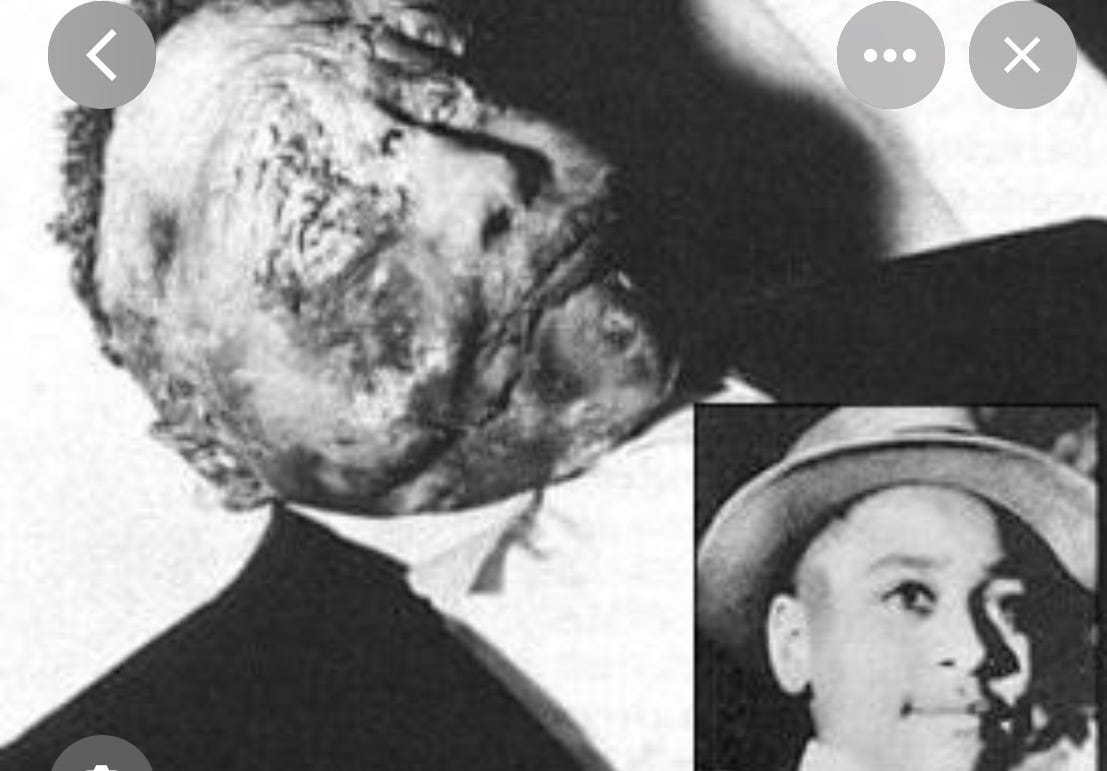
What Mississippi returned to her was almost unrecognizable.
Then Mamie made one of the bravest decisions of the Civil Rights era.
She decided America was going to look.
The casket would remain open.
She wanted people to see what had been done to her child.
Mamie chose to show the world.
John H. Johnson chose to publish the photographs in his Chicago-based Jet magazine.
A mother opened the casket.
A publisher put what was inside before his readers.
Both gave America something it could never claim it hadn’t seen.
And America looked.
The National Park Service today describes Emmett’s murder and Mamie’s response as a catalyst of the modern Civil Rights Movement.
A few months later, Rosa Parks refused to surrender her seat on a Montgomery bus.
She later remembered thinking about Emmett Till.
Before America knew the names of so many people who would lead the movement, it knew the face of a fourteen-year-old boy from Chicago.
Because his mother refused to let the country look away.
And a publisher helped make sure it couldn’t.
Emmett came home to Chicago.
He and Mamie are buried at Burr Oak Cemetery, just outside the city.
Chicago has honored him, too.
In 1991, part of 71st Street was given the honorary name Emmett Till Road.
Mamie was there for the dedication.
So was Rosa Parks.
It was an honor.
It just wasn’t enough.
An honorary street is exactly what the word says.
Honorary.
The regular street sign remains.
Eventually the honorary signs stop.
Emmett Till deserves complete honors, not a partial street.
Rename 71st Street.
Not another few blocks.
Not another extension.
Not another honorary sign.
From the lake to Chicago’s western border.
Emmett Till Road.
Let the number disappear.
Roosevelt doesn’t suddenly become a number again.
Neither does Cermak.
Neither does Pershing.
Neither does Garfield.
Neither does Marquette.
Their names became part of Chicago.
Emmett Till belongs there too.
A fourteen-year-old Chicago boy was murdered.
His mother brought her beautiful son home and made America look at what had been done to him.
The photographs helped awaken a country.
The boy became part of American history.
And Chicago gave him part of a street.
He deserves the whole damn thing.
Someday, I’d like a Chicago kid to ask:
“Where’s 71st Street?”
And hear the answer:
There isn’t one anymore.
It’s Emmett Till Road.